
MIUN BIO360 COURSE
MIUN Body Fluids And Circulation question Bank

Report a question

Body Fluids And Circulation Menu
True or false questions
- Introduction
- Blood and plasma
- Formed elements
- Lymph (Tissue Fluid)
- Circulatory Pathways
- Human Circulatory System
- Cardiac Cycle
- Electrocardiograph (ECG)
- Double Circulation
- Regulation of Cardiac Activity
- Disorders of the Circulatory System
- Summary
- Random
True or false questions
Notifications If any
No notifications so far. If any we will let you know
How to attempt the Quiz?
The detailed Procedure is here.
To register on the MIUN NEET website, follow these steps:
1. Visit the MIUN NEET website: Go to https://miun.in/.
2. Click on “Register” You’ll find this option on the homepage/menu bar. https://miun.in/register/
3. Fill in your details: Provide your name, mobile number, WhatsApp number, and a valid email address (for verification).
4. Create a password: Choose a password and confirm it by re-entering it.
5. Verify your email: Check your email for a verification link and click on it to confirm your registration.
6. Complete the registration: Once verified, you’ll be registered and can log in to start using the platform.
To log in to the MIUN NEET website:
1. Go to the MIUN NEET website: https://miun.in/.
2. Click “Login”: This option is on the homepage. https://miun.in/login.
3. Enter your credentials: Provide your registered User name/email address and password.
4. Click ” Login ” This will take you to your account dashboard.
You’re all set! If you encounter any issues, their support team should be able to help further. What’s next on your agenda?
To attempt a quiz on the MIUN website, follow these steps:
1. Login: Go to the MIUN Biology question bank and log in with your registered email and password.
2. Navigate to the Quiz Section: Once logged in, look for the quiz section or the specific lesson, Topic/subtopic and quiz you want to attempt.
3. Select the Quiz: Click on the quiz you want to take.
4. Read Instructions: Carefully read any instructions or guidelines provided for the quiz, if any.
5. Answer Questions: Select your answers for each question and submit your responses.
6. Submit Quiz: Once you’ve answered all questions, submit the quiz to see your results.
Body Fluids and Circulation Assertion Reason Quiz Part 3
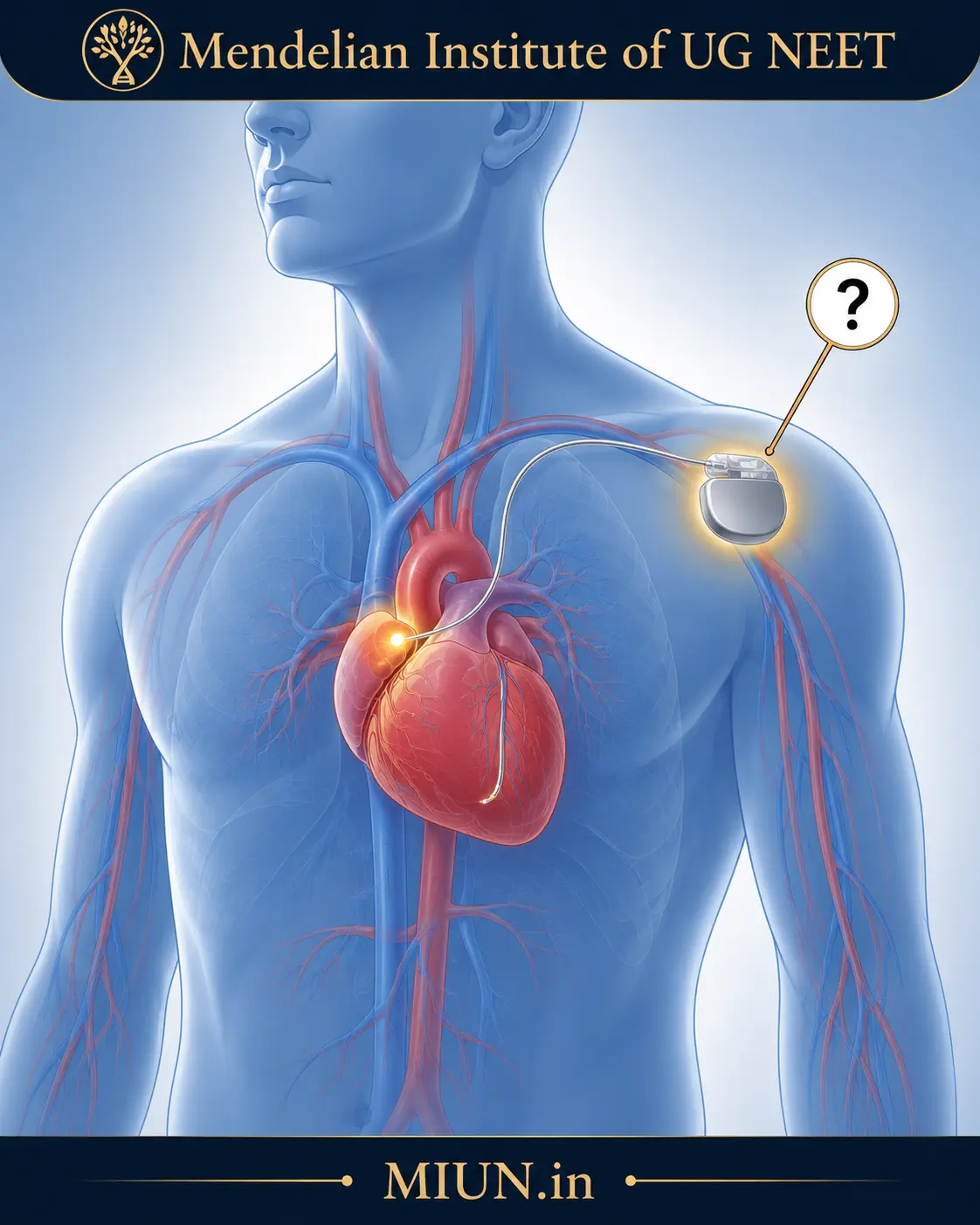
———-
Welcome to the Body Fluids and Circulation Quiz by the Mendelian Institute of UG NEET (MIUN) — the most comprehensive and concept-driven NEET Biology question bank designed to help you master every heartbeat of human physiology.
At MIUN, we don’t just study Biology — we feel it flow through every capillary of understanding. This Body Fluids and Circulation quiz transforms complex textbook lines into living logic, guiding you from the rhythm of the heart to the chemistry of plasma.
🩸 Concepts Covered Body Fluids and Circulation Assertion Reason Quiz Part 1
Each question in this quiz helps you explore:
• Blood — composition, plasma, formed elements (RBCs, WBCs, platelets), and coagulation of blood
• Lymph (Tissue Fluid) — composition, function, and how it differs from blood
• Human Circulatory System — structure of the heart, pericardium, major vessels, and valves
• Double Circulation — pulmonary and systemic pathways and their significance
• Cardiac Cycle — systole, diastole, and rhythmic coordination of the chambers
• Heartbeat and ECG — understanding P, QRS, and T waves and their clinical meaning
• Regulation of Cardiac Activity — neural and hormonal control of heartbeat
• Circulatory Disorders — hypertension, coronary artery disease, atherosclerosis, angina pectoris, and heart failure.
❤️🔥 Why MIUN Makes the Difference
At MIUN NEET Biology, concepts don’t stay static — they circulate.
They move, evolve, and nourish your understanding, just as blood nourishes every living cell.
With over 50,000 NEET-level Biology questions, our Body Fluids and Circulation quiz ensures you master not only the structure of the heart but also the rhythm of logic behind every question.
Every quiz is precisely mapped to NCERT Class 11 and 12 topics, ensuring your preparation remains syllabus-pure, exam-perfect, and concept-deep.
⸻
🧠 Learn. Flow. Evolve. In MIUN, we say:
“Where concepts circulate like blood — nourishing every cell of your mind.”
Practice the Body Fluids and Circulation quiz now and watch your understanding flow seamlessly — from plasma to pulse, from artery to accuracy. Because every quiz at MIUN brings you one heartbeat closer to your NEET dream.
▶️ Explore MIUN on YouTube
Body fluids And Circulation NEET Questions

Step into MIUN, where Biology champions are made! At MIUN, we are unwaveringly dedicated to ensuring your success. Our 1850 true or false questions from Body fluids And Circulation NEET Questions have been meticulously crafted. These questions are designed by experts specifically for the NEET syllabus based on NCERT alone. They guarantee a comprehensive understanding of each topic.MIUN take pride in cultivating a supportive learning community where every student is empowered to excel with confidence and ease. Join us now and embark on a journey to conquer the NEET with flying colors!paces
Immerse with MIUN and emerge as a NEET Biology whiz!”
Body Fluids and Circulation MCQs
Body Fluids and Circulation is a crucial topic for NEET aspirants. Let’s explore why it’s important:
- Understanding Physiology:
- Body fluids (like blood and lymph) play a vital role in maintaining homeostasis.
- Knowledge of circulation mechanisms helps understand how nutrients, gases, and waste products are transported within the body.
- Key Concepts Covered:
- Blood Components: Understanding blood cells (RBCs, WBCs, platelets) and plasma composition.
- Blood Groups: ABO and Rh grouping, which has clinical implications.
- Circulatory Pathways: Learning about systemic and pulmonary circulation.
- Human Circulatory System: Heart, blood vessels, and their functions.
- Cardiac Cycle: Phases of heart contraction and relaxation.
- ECG (Electrocardiogram): Interpretation of heart electrical activity.
- Clinical Relevance:
- Questions related to blood groups, clotting, and heart function appear in NEET exams.
- Understanding circulation is essential for medical practice.
Mastering this topic will enhance your overall understanding of human physiology. Best of luck with your NEET preparation! 🌟🩺📚
motivational quote
I am always ready to learn although I do not always like being taught.
Winston Churchill.
Are they same?